



Congratulations on your new role as a parent and welcome to the adventurous journey of parenthood! While it comes naturally for some, for some it is a slow process and takes a lot of learning. Here are few emergency situations which you should be aware of.
SIDS
Usually happens during sleep, Sudden infant death syndrome (SIDS) is the unexplained death, of a seemingly healthy baby less than a year old. It is sometimes known as crib death because the infants often die in their cribs.
Although the cause is unknown, it appears that SIDS may be associated with abnormalities in the portion of an infant’s brain that controls breathing and arousal from sleep. Researchers have discovered some factors that may put babies at extra risk. They’ve also identified some measures you can take to help protect your child from SIDS. Important steps you should follow to avoid SIDS-
- Firm Bed, No Soft Toys or Bedding
- Don’t Smoke around your baby
- Breastfeed as long as you can
- Don’t overheat your baby
- Put Baby to sleep on Back
Infant fall
While you may think you are stepping away from your little one for a moment, leaving a baby unattended can lead to the risk of falling. Falls from a bed could harm your baby from an impact to the floor. If your baby falls off the bed, there are several checks you should make to ensure they receive prompt and appropriate immediate care. They may appear limp or sleeping, and usually resume consciousness rather quickly. Regardless, this is a medical emergency.
- If your baby appears to have a serious head injury, such as visible signs of bleeding or unconsciousness go to the doctor immediately.
- If your child is vomiting or seizing, turn them on their side, keeping the neck straight. If you see bleeding, apply pressure gently with gauze or a clean towel or cloth until help arrives.
- If your baby doesn’t appear to have a severe injury, gently pick them up and begin comforting. Your baby will likely be scared and alarmed. While comforting, look at their head to inspect for visible signs of injury. In case the child vomits later or isn’t his usual self, please take the child to the doctor
Choking
From the time your child starts picking things up with her fingers, you will need to be vigilant about choking hazards. Make sure they are sitting while eating or drinking and don’t leave them unattended, as they can’t make any noise to alert you that they’re choking. Choose their food wisely. Mash or grind food so that it is soft enough for your baby to gum or chew. When they are at finger-food stage, cut fruit, veggies, meat, and cheese into little more than pea-size pieces for them to eat comfortably.
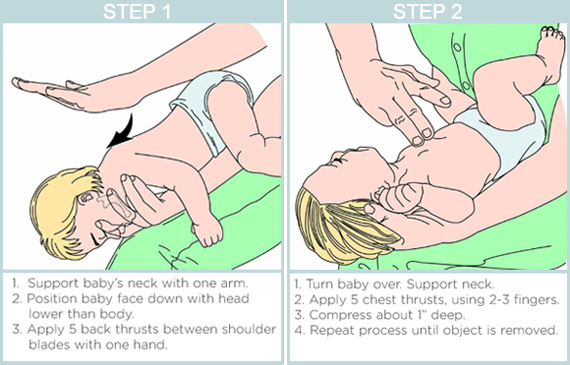

Here is what you should do, if your child is choking –
- Turn them facedown over your forearm or on your lap.
- Hold their jaw with one hand to support the head, which should be lower than her chest.
- Using the heel of your free hand, deliver five quick slaps between their shoulder blades.
- If they still can’t breathe, try chest thrusts: While holding your baby, turn her faceup, keeping her head lower than her chest (not pictured here). Place two fingers in the middle of her chest and give five thrusts. Repeat with back blows and chest thrusts until the object is visible and you can remove it.